
Google says “we do not use your Gmail content for training our Gemini AI model.”

Google says “we do not use your Gmail content for training our Gemini AI model.”

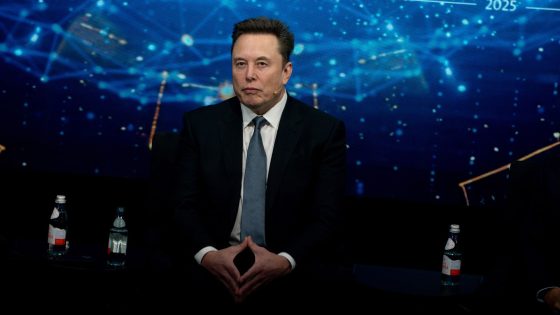
In Musk’s vision of the future, technical skill will be the baseline, with human judgement the differentiating factor.

Background This research uses machine learning (ML) models to determine significant predictive factors for CVD events in Iran, a country with high mortality rates. The study evaluates the effectiveness of deep learning and mixed-effects logistic models in predicting 10-year CVD incidence using longitudinal TLGS data. Methods A total of 4,872 adults aged ≥ 30 years without a history of CVD at baseline (2006–2008) were followed until 2020. Following exclusions due to prevalent CVD or insufficient follow-up data, the final analytic sample comprised 1,942 men and 2,930 women. Baseline demographic, behavioral, and biochemical characteristics were utilized as input features. A clinical history examination was employed to identify and confirm incident CVD events, such as stroke and coronary heart disease (CHD). Using longitudinal data collected during a 10-year study period, deep learning models based on Long Short-Term Memory (LSTM) and Gated Recurrent Unit (GRU) architectures were utilized to detect variations in risk factor dynamics. The area under the receiver operating characteristic curve (AUC) was employed to assess the model’s performance. Results During the follow-up period, 545 participants (11.2%) experienced CVD events. In both sexes, the GRU model outperformed the LSTM model. In women, the GRU achieved an AUC of 0.739, whereas in men it achieved 0.738, in both cases outperforming LSTM. Compared with the traditional mixed-effects model, discrimination was comparable in women (GRU 0.739 vs. 0.74) and higher in men (0.738 vs. 0.70). Even though the models were restricted to 21 commonly employed clinical variables, their performance was similar to that of larger-scale studies that included hundreds of variables. Conclusions Deep learning models, such as GRU, can effectively leverage longitudinal medical data to predict future cardiovascular disease events. The models achieved performance comparable to studies that used far more variables, despite relying on a limited feature set.

Background
High-quality documentation is an essential part of providing patients with good clinical care. Clinical letters promote continuity, reduce errors, and communicate effectively betwe…
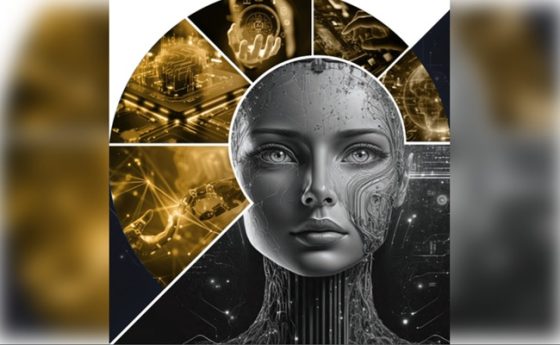
The growing role of artificial intelligence in recruitment is turning the hiring landscape chaotic for both candidates and employers, Fortune reports.
A dream or a nightmare?
A state-by-state AI policy scan from the Council of State Governments offers a clear and comparative view of the AI governance landscape across the U.S., even as the federal government eyes restrictions.

The world’s richest man said the decision to work will become like a hobby such as sport or growing your own vegetables.

Artificial intelligence (AI) has been a big theme in markets lately. Returns have been so strong that some have openly wondered if AI is experiencing a bubble. But data shows that equity returns (Figure 2, bars) over the last couple of years have mostly been driven by earnings (Figure 2, circles), not multiple expansion.

The startup’s rapid growth suggests that enerprises are embracing AI agents.