
Though Nvidia and Palantir are Wall Street’s AI darlings, a “magnificent” stock that’s lurking in plain sight is far more attractive.

Though Nvidia and Palantir are Wall Street’s AI darlings, a “magnificent” stock that’s lurking in plain sight is far more attractive.

It’s another news roundup! This time, we cover how, using data analytics – and ironically, some AI – a team at Cornell University has mapped the environmental impact of AI by state. They determined that, by 2030, the rate of AI growth in the U.S. would put an additional 24 to 44 million metric tons of carbon dioxide into the atmosphere. The team further calculated that by 2030, AI could use as much water as 6 to 10 millions Americans do every year. All of this, they conclude, would put the tech industry’s climate goals out of reach. This episode, we also get into the potential for life on one of Saturn’s moons and a new discovery about why chameleons’ eyes are so special. Interested in reporting on the environmental impact of AI? Email us your question at shortwave@npr.org.Listen to every episode of Short Wave sponsor-free and support our work at NPR by signing up for Short Wave+ at plus.npr.org/shortwave.
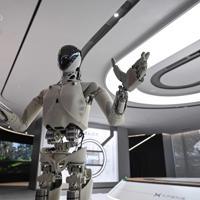
A pair of swivelling, human-like robotic arms, built for physical artificial intelligence research, mirror the motions of an operator in a VR headset twirling his hands like a magician.
The CEOs of DeepL and Picsart told CNBC they were concerned about AI valuations but touted the longer term potential of the technology.
Researchers Ankita Murmu, Balázs Győrffy, et al. have conducted a review entitled “Artificial intelligence methods available for cancer research”. This review was published in Frontiers of Medicine, Volume 18, Issue 5.c
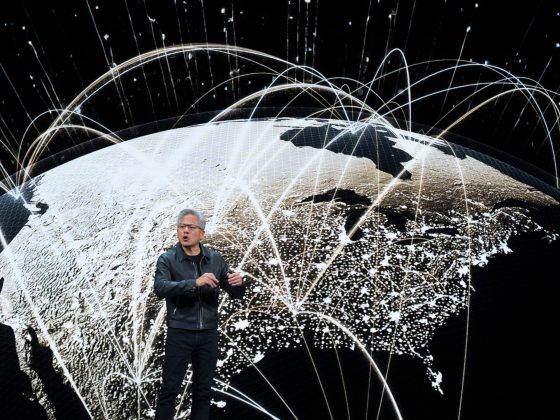
After billions poured into AI, doubts are growing. Can AI survive the end of its hype cycle?

Larry Ellison’s software company falls more than rivals over its borrowing and reliance on OpenAI contracts

OpenAI sought to understand how models make decisions and adhere to behaviors. It went down to the neuron level to find out.

Amid fears of an AI bubble, much has been made of recent reports suggesting that AI has yet to generate returns for companies investing billions into the tech.